
How Can Wooden Veneer Wall Panel Films Transform Your Space Without Costly Renovation Mistakes?
Wooden Veneer Wall Panel Films are a practical way to achieve a warm, wood-forward interior look while avoiding many of the common pain points of traditional wall upgrades—high labor costs, long downtime, uneven finishes, and constant maintenance. But not all films perform the same. This guide breaks down what buyers actually worry about (durability, moisture, installation, safety, and long-term value) and shows you how to choose and use the right film with confidence.
Article Abstract
This article explains what Wooden Veneer Wall Panel Films are, where they perform best, and how to avoid the most common purchase and installation regrets. You’ll learn how to evaluate quality (surface realism, scratch resistance, adhesion, and stability), compare films to paint/laminate/real wood, plan installation on different substrates, maintain the finish, and make a smart selection for homes, hospitality, retail, and commercial interiors. A practical checklist and FAQ section are included for quick decision-making.
Table of Contents
- Article Outline
- What Are Wooden Veneer Wall Panel Films?
- What Problems Do Buyers Usually Face?
- Where Do They Work Best?
- How to Judge Quality Before You Buy
- Film vs Paint vs Laminate vs Real Wood
- Key Specs That Actually Matter
- Installation Planning and Best Practices
- Care, Cleaning, and Longevity
- Indoor Air, Safety, and Responsible Materials
- FAQ
- Wrap-Up and Next Steps
Article Outline
- Define Wooden Veneer Wall Panel Films and how they differ from real veneer panels
- Address buyer pain points: peeling, bubbles, cheap “plastic” look, moisture, scratches
- Explain best-use scenarios and where caution is needed
- Provide a quality checklist and spec guide
- Compare alternatives with a practical table
- Offer installation steps, substrate prep, and common mistake prevention
- Cover maintenance and long-term performance
- Answer frequently asked questions and end with a clear call to action
What Are Wooden Veneer Wall Panel Films?
Wooden Veneer Wall Panel Films are decorative surface films engineered to replicate the look (and sometimes the tactile grain feel) of wood veneer—without requiring full wood panels. They are commonly applied to wall panels, cabinetry, doors, feature walls, columns, reception desks, and other interior surfaces where you want a consistent wood aesthetic with fewer installation complications.
Depending on the product type, these films may be designed for lamination, wrapping, or direct application onto prepared surfaces. The best versions aim to balance three things that buyers care about the most: visual realism, reliable adhesion, and everyday durability.
Brands in the architectural surface category, including Future Colors (Shandong) Material Technology Co., Ltd., focus on producing film options intended to meet practical needs in real-world interior environments—busy commercial traffic, frequent cleaning, and varying humidity conditions.
What Problems Do Buyers Usually Face?
Let’s be honest: most people don’t fear “choosing a film.” They fear the regrets that show up after installation. Here are the pain points that come up again and again:
- Peeling edges and lifting corners because the substrate wasn’t prepared, the adhesive wasn’t suited to the surface, or the environment is humid.
- Bubbles and wrinkles caused by trapped air, rushed application, or uneven pressure during installation.
- A cheap plastic look when the print quality is flat, the gloss is wrong, or the grain texture doesn’t match realistic wood patterns.
- Scratch and scuff marks in high-traffic areas like hallways, shops, hotels, or kids’ spaces.
- Moisture anxiety—buyers want wood warmth but worry about swelling, mold, or film failure near kitchens and bathrooms.
- Mismatch between sample and reality because lighting, wall texture, or panel seam planning wasn’t considered.
Good news: most of these issues are avoidable with the right selection criteria and a disciplined installation plan.
Where Do They Work Best?
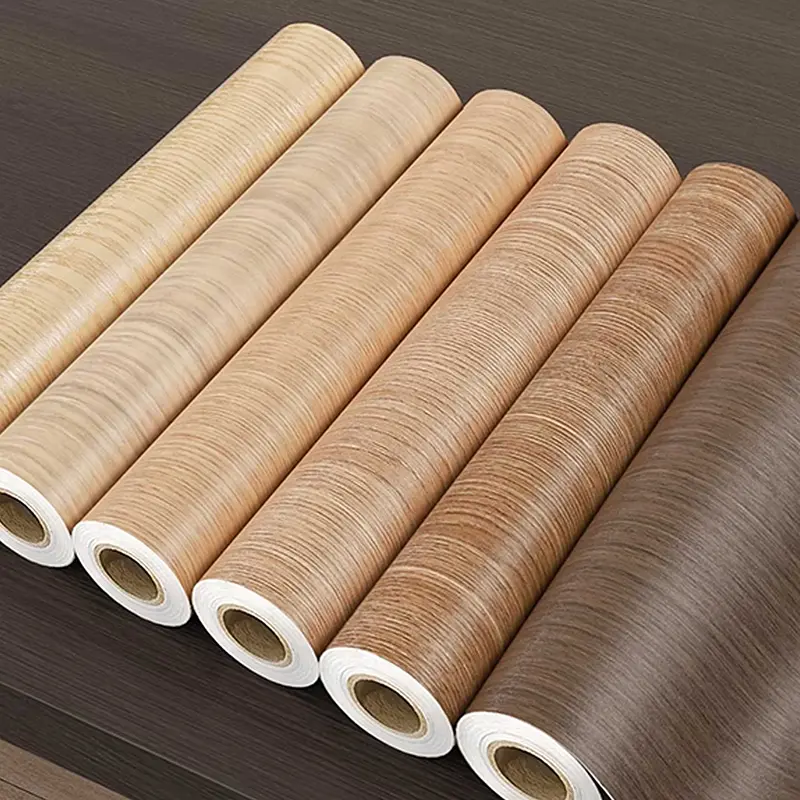
Wooden Veneer Wall Panel Films shine when you need a consistent finish across many surfaces, fast, with minimal disruption. Common successful use cases include:
- Feature walls in living rooms, bedrooms, lobbies, and meeting spaces
- Retail and showroom interiors where visual impact matters but downtime is expensive
- Hospitality spaces that need a refined look and easy wipe-clean maintenance
- Office interiors (reception walls, corridor panels, acoustic panel facings)
- Renovation upgrades where tearing out old finishes would be messy or costly
Where to be more careful: areas with direct water exposure, extreme heat sources, or surfaces that are dirty, chalky, or unstable. Films perform best on stable, clean, and properly primed substrates.
How to Judge Quality Before You Buy
If you only remember one thing, make it this: a film that “looks great” in a tiny sample can still fail in real life if it lacks structural stability and proper surface engineering.
- Visual realism: Look for natural grain variation, believable pore patterns, and balanced color depth (not “flat” printing).
- Surface texture: Embossing that aligns with the printed grain typically looks more convincing at close range.
- Scratch/scuff resistance: Especially important for commercial interiors and homes with kids/pets.
- Adhesion system compatibility: The film and adhesive approach should match your substrate (MDF, plywood, metal, PVC board, existing laminates, etc.).
- Dimensional stability: Quality films resist noticeable shrinking, warping, or edge lifting under normal temperature swings.
- Consistency between rolls: For large projects, color and pattern consistency matters more than people expect.
Practical tip: request larger samples and test them on your actual substrate under your actual lighting. It’s a small step that prevents big heartbreak.
Film vs Paint vs Laminate vs Real Wood
Choosing the right finish isn’t about “what’s best,” it’s about “what fits your constraints.” Here’s a quick comparison buyers find useful:
| Option | Best For | Common Downsides | Typical Buyer Concern |
|---|---|---|---|
| Wooden Veneer Wall Panel Films | Fast renovations, consistent wood look, multi-surface wrapping | Needs good prep and careful installation | “Will it peel or look fake?” |
| Paint | Simple color changes, low material cost | Less premium texture, shows wall imperfections | “Will it look flat and cheap?” |
| Laminate Sheets | Durable surfaces, certain commercial uses | Harder seams, less wrap flexibility | “Will joints ruin the look?” |
| Real Wood Veneer / Panels | Premium craftsmanship, authentic material | Higher cost, more labor, more sensitivity to environment | “Is the upkeep worth it?” |
Key Specs That Actually Matter
Marketing terms can be noisy. Focus on what affects performance and appearance in daily use:
- Surface layer durability: The top protective layer influences scratch resistance and cleanability.
- Heat tolerance (practical range): Important near appliances, sunlight-heavy windows, or lighting fixtures.
- Moisture and humidity resistance: Helps reduce edge lifting and surface issues in humid climates.
- Color stability: Better formulations resist noticeable fading under interior lighting and indirect sunlight.
- Adhesion approach: Decide whether your project needs lamination, wrapping, or direct application methods.
- Roll consistency: Especially for large walls—ask about batch control for big orders.
If your project is commercial, also consider cleaning frequency and impact resistance. A finish that looks perfect on day one but scuffs by week two is not “cost-effective,” it’s just delayed cost.
Installation Planning and Best Practices
Most failures blamed on the film are actually preparation failures. Here’s a grounded, buyer-friendly installation plan:
- Step 1: Confirm the substrate — MDF and plywood are common, but they need a smooth, sealed surface. Porous or dusty surfaces are risky.
- Step 2: Clean and degrease — remove dust, oils, silicone residues, and anything that blocks adhesion.
- Step 3: Level imperfections — fill dents, sand bumps, and ensure edges are properly finished.
- Step 4: Plan seams and direction — align grain direction across panels and decide where seams will be least visible.
- Step 5: Control the environment — stable temperature and moderate humidity reduce application issues.
- Step 6: Apply with steady pressure — use proper tools to avoid air pockets and stretching.
- Step 7: Finish edges properly — corners and edges are where most lifting begins.
Common mistakes to avoid:
- Applying on damp walls or newly painted surfaces that haven’t fully cured
- Skipping primer/sealer on porous boards
- Rushing around corners without proper technique
- Ignoring grain direction and then hating the final look
- Not testing a sample on the real substrate first
Care, Cleaning, and Longevity
One reason people choose Wooden Veneer Wall Panel Films is easier upkeep compared to many traditional finishes. Still, longevity depends on sane maintenance habits:
- Daily cleaning: Use a soft cloth; avoid abrasive pads that can dull the surface over time.
- Spill response: Wipe quickly, especially around seams and edges.
- Chemicals: Avoid harsh solvents unless the product is specifically rated for them.
- Impact zones: In busy corridors or retail settings, consider protective trims at corners.
If your goal is a long-lasting premium look, don’t treat installation as the finish line—treat it as the foundation.
Indoor Air, Safety, and Responsible Materials
For homes and commercial spaces alike, buyers increasingly care about indoor comfort and responsible material choices. When evaluating films, ask about:
- Odor and emissions: Better-managed production and material selection can help reduce unpleasant post-install smells.
- Cleanability: Surfaces that clean easily reduce the need for aggressive chemicals.
- Project suitability: Different environments (schools, clinics, hospitality) may have different requirements—match the product to the space.
The right film choice supports not only aesthetics but also day-to-day livability—especially when the wall finish covers a large surface area.
FAQ
-
Are Wooden Veneer Wall Panel Films suitable for humid climates?
They can be, if you choose a film designed for stability and you prepare the substrate correctly. Humidity issues most often appear at edges and seams, so finishing details matter. -
Will the finish look “fake” up close?
Realism depends on print quality, texture alignment, and the gloss level. Larger sample testing under your lighting is the quickest way to avoid disappointment. -
Can I apply these films over existing panels?
Often yes, as long as the existing surface is stable, clean, smooth, and compatible with the chosen application method. If the old finish is chalky, peeling, or greasy, it must be corrected first. -
How do I reduce visible seams on big feature walls?
Plan panel layout, align grain direction, choose seam placement strategically, and ensure the substrate is flat. Good planning can make seams nearly disappear in normal viewing conditions. -
What causes bubbling during installation?
Trapped air, uneven pressure, dusty surfaces, or rushing. Proper tools and a controlled environment help a lot. -
How long do Wooden Veneer Wall Panel Films last?
Lifespan varies by quality, traffic level, and maintenance. In many interiors, a well-chosen film on a properly prepared substrate can deliver strong long-term value without constant refinishing.
Wrap-Up and Next Steps
Wooden Veneer Wall Panel Films are a smart answer for modern interiors when you want the warmth of wood aesthetics without the renovation chaos. The “secret” isn’t secret at all: choose a film that matches your environment, judge quality with real-world tests, and treat surface prep and edge finishing like non-negotiables.
If you’re planning a project and want a more confident selection process—matching grain style, finish level, and performance needs—Future Colors (Shandong) Material Technology Co., Ltd. can support you with product options designed for practical interior applications. Ready to move from “idea” to a finish you’ll still love months from now? Contact us to discuss your project goals, recommended film choices, and the smartest approach for your substrate and environment.
Send Inquiry



X
We use cookies to offer you a better browsing experience, analyze site traffic and personalize content. By using this site, you agree to our use of cookies.
Privacy Policy