
Why Does Wood Grain Designs Pvc Film Solve Surface Durability and Design Problems?
Abstract
Wood Grain Designs Pvc Film has become a practical way to deliver the warmth of wood aesthetics on modern surfaces—without the cost, variability, or maintenance concerns of natural veneer. This article breaks down what customers typically worry about (peeling, bubbling, scratches, color mismatch, cleaning, and long-term stability), how to choose the right film for your project, and how to avoid installation mistakes that cause early failures. You’ll also find a quick comparison table, a step-by-step selection checklist, and a clear FAQ. If you’re evaluating solutions for doors, cabinets, furniture panels, wall cladding, or decorative profiles, this guide helps you make a confident, durable decision with fewer surprises.
Table of Contents
- Abstract
- Outline
- What Problems Are Buyers Trying to Solve?
- What Is Wood Grain Designs Pvc Film?
- How Do You Get a “Real Wood” Look That Doesn’t Feel Fake?
- What Performance Factors Actually Matter Long-Term?
- How Do You Choose the Right Film for Your Use Case?
- Installation and Maintenance Without Regrets
- Where Does It Work Best?
- Quick Comparison Table
- FAQ
- Conclusion
Outline
- Identify the top reasons projects fail (adhesion, surface prep, and incorrect finish choice).
- Understand what Wood Grain Designs Pvc Film is and how it’s used on common substrates.
- Pick the right visual style (grain direction, tone, and texture) to match your space or product line.
- Prioritize performance needs: abrasion resistance, water resistance, stain resistance, and color stability.
- Use a practical checklist to select specifications for kitchens, hospitality, offices, and retail.
- Install correctly, maintain easily, and extend service life with simple habits.
What Problems Are Buyers Trying to Solve?
If you’re considering Wood Grain Designs Pvc Film, you’re probably not shopping for “pretty” alone—you’re trying to avoid very specific headaches that show up after delivery or installation. Here are the pain points that come up most often in real projects:
- Peeling edges and lifting corners: Often caused by poor surface prep, wrong adhesive system, or sharp edges that weren’t properly wrapped.
- Bubbles and “silvering”: Usually the result of trapped air, uneven pressure, dusty substrates, or moisture in the panel.
- Scratches, scuffs, and visible wear: High-touch areas like cabinets, doors, and retail fixtures need higher abrasion resistance than decorative wall panels.
- Color inconsistency across batches: This becomes a nightmare when you’re doing phased installations or replenishing inventory for a product line.
- Looks too flat or “plastic”: The wrong texture, gloss level, or grain print can make a premium design feel cheap.
- Cleaning issues: Some surfaces show fingerprints, oil marks, or discoloration if the finish isn’t matched to the environment.
- Complex installation or rework: Tight timelines don’t tolerate a film that’s hard to form, hard to trim, or unforgiving on curves.
A good film solution doesn’t just “cover” a panel—it should prevent these failures by matching the film structure, finish, and application method to your actual usage conditions.
What Is Wood Grain Designs Pvc Film?
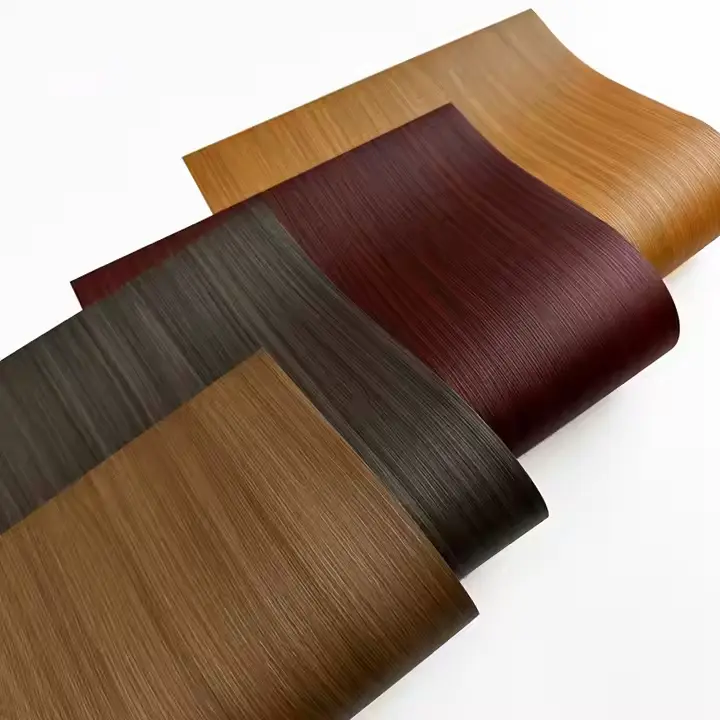
Wood Grain Designs Pvc Film is a decorative surface material engineered to replicate wood patterns and textures while adding a protective layer to substrates such as MDF, plywood, particleboard, WPC, and other panel materials. In many production lines, it’s applied through lamination, wrapping, or pressing processes to create consistent, scalable finishes for furniture and interior components.
The main idea is simple: you get the visual character of wood grain (oak, walnut, teak, ash, maple, and more) with a surface that can be designed for practical performance—like stain resistance in kitchens or abrasion resistance in commercial spaces. This is one reason manufacturers and contractors increasingly choose films over natural veneer in projects where uniformity and predictable delivery matter.
Future Colors (Shandong) Material Technology Co., Ltd. produces decorative film solutions for customers who want consistent appearance, stable production output, and application flexibility across different panels and product categories.
How Do You Get a “Real Wood” Look That Doesn’t Feel Fake?
“Realistic” is not one single feature—it’s a combination of print fidelity, texture, gloss control, and smart design choices. If you want your surfaces to read as wood at a glance (and still hold up under close inspection), focus on these points:
- Grain depth and texture pairing: A convincing finish aligns the tactile texture with the printed grain lines. When the texture and print don’t match, the surface immediately feels artificial.
- Gloss level that matches the space: High gloss can look modern but shows fingerprints and scratches more easily; matte and super-matte can look premium and hide wear better, especially in residential and hospitality settings.
- Color tone consistency: Warm walnut tones, neutral oak, or dark espresso shades should remain stable across batches—particularly important for modular furniture systems and project-based procurement.
- Grain direction planning: Door faces, cabinet runs, and wall panels look more natural when grain direction is consistent. Random direction changes can break the illusion.
A practical trick: when selecting samples, view them under the same lighting the project will use (warm LEDs vs. cool office lighting) and at the same distance customers will experience the surfaces. The “right” wood tone can change dramatically depending on lighting temperature.
What Performance Factors Actually Matter Long-Term?
Most surface complaints happen after installation—when the film meets daily use. Instead of focusing only on color and pattern, evaluate performance in terms that match your environment.
- Abrasion and scratch resistance: For doors, countertops (non-direct heat zones), retail fixtures, and hospitality furniture, abrasion performance is the difference between “looks great for years” and “looks tired in months.”
- Water and humidity tolerance: Kitchens, bathrooms, laundry areas, and coastal climates punish weak systems. Moisture exposure is also where edge sealing and wrapping quality becomes critical.
- Stain and chemical resistance: Cleaning agents, hand oils, coffee, sauces, and cosmetics can all leave marks if the top layer isn’t designed for it.
- Heat stability (realistic expectations): Decorative films are not a substitute for direct-heat countertop materials. If your surface may touch hot cookware or experience high localized heat, you need a solution designed for those conditions—or a protective system on top.
- Color stability under light: Sun-facing interiors, shop windows, and bright office spaces demand stable color performance. This is especially important when you need the same shade across replacement parts later.
- Formability and edge performance: If you’re wrapping profiles, doors, or curved components, the film must form reliably without stress whitening, edge lifting, or shrink-back.
In short: match the film to the “hardest day” your surface will face—not the best day in the showroom.
How Do You Choose the Right Film for Your Use Case?
Here’s a selection checklist you can use whether you’re specifying materials for manufacturing, procurement, or a renovation project. Use it like a filter: the more “yes” answers you have in a category, the more you should prioritize that performance feature.
- Is the surface touched frequently? (cabinet doors, door panels, wardrobe fronts)
- Will it be cleaned often? (hospitality, clinics, retail, rental properties)
- Is it near water or steam? (kitchens, bathrooms, utility rooms)
- Is it exposed to sunlight? (window-facing walls, shop displays)
- Does it have edges, curves, or wrapped profiles? (moldings, frames, shaped doors)
- Do you need batch consistency over time? (project phases, replenishment, standardized product lines)
Once you map your use case, you can select the right combination of Wood Grain Designs Pvc Film attributes:
- Finish choice: Matte for fingerprint control, satin for balance, glossy for modern shine (with higher care needs).
- Texture choice: Natural pore texture for realism, light texture for easy cleaning, deeper embossing for premium feel.
- Application method fit: Flat lamination vs. wrapping vs. pressing—choose a film that behaves well in your production or installation process.
- Edge strategy: Decide early whether you’re wrapping edges, using edge banding, or using trim systems—this impacts durability more than most people expect.
Installation and Maintenance Without Regrets
Many “material failures” are actually installation failures. If you want your surfaces to stay clean, flat, and secure, these fundamentals matter:
- Surface prep is non-negotiable: Dust, oil, moisture, and uneven sanding reduce adhesion. A clean, stable substrate is the foundation.
- Control temperature and humidity during application: Extreme cold, excessive humidity, or rapid temperature changes can contribute to bubbles and edge lift.
- Use consistent pressure: Uneven pressure can trap air and create weak bonding zones that fail later.
- Respect corners and edges: Corners are stress points. Proper wrapping technique, trimming, and edge sealing reduce early lifting.
- Allow adequate curing/set time: Rushing handling or packaging too soon can shift the film before it stabilizes.
For maintenance, keep it simple: use non-abrasive cloths, avoid harsh solvents, and treat high-touch areas with regular gentle cleaning. The biggest “killer” is usually aggressive scrubbing combined with gritty dust—basically sandpaper in disguise.
Where Does It Work Best?
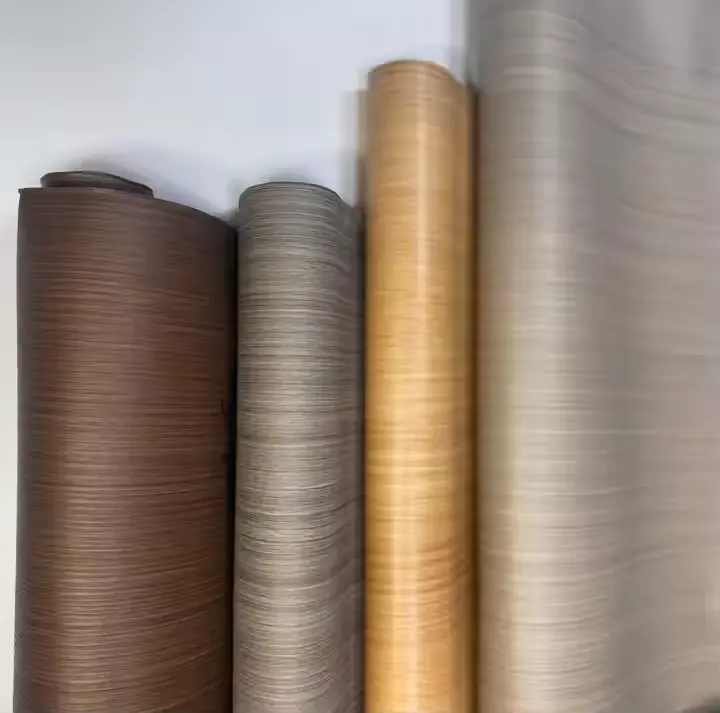
Wood Grain Designs Pvc Film is widely used when customers want wood aesthetics with scalable production and practical durability. Common applications include:
- Kitchen cabinets and wardrobes: Consistent grain, easy cleaning, and a wide range of tones.
- Interior doors and frames: Uniform look, strong surface protection, and repeatable manufacturing output.
- Furniture panels and partitions: Great for offices, hospitality rooms, and modular systems.
- Wall cladding and decorative panels: Adds warmth to commercial interiors without the variability of natural veneer.
- Profiles and wrapped components: For trim, moldings, and shaped parts when formability is required.
If you’re building a product line, this type of film also supports brand consistency: your “signature walnut” or “signature oak” can be reproduced across different SKUs and sizes without the natural variation that complicates quality control.
Quick Comparison Table
| Scenario | Recommended Finish Direction | Key Priority | Common Mistake to Avoid |
|---|---|---|---|
| Residential kitchens | Matte or satin | Stain resistance + easy cleaning | Ignoring edge sealing near sinks |
| Hospitality rooms | Matte/satin with realistic texture | Abrasion resistance + fingerprint control | Choosing high gloss for high-touch furniture |
| Retail fixtures | Satin or controlled gloss | Scuff resistance + visual impact | Underestimating cleaning frequency |
| Office partitions | Matte or light texture | Uniformity + long-term appearance | Mismatching lighting during sample approval |
| Wrapped profiles/curves | Depends on design intent | Formability + edge durability | Overstretching at corners, leading to lift |
FAQ
-
Can Wood Grain Designs Pvc Film replace natural wood veneer in premium interiors?
In many cases, yes—especially when you need consistent color and repeatable production. For ultra-luxury projects that demand authentic grain variation, veneer still has a place, but film is often the smarter choice for durability and uniformity. -
How do I prevent peeling on cabinet edges and door corners?
Focus on substrate preparation, correct wrapping technique, and edge strategy. Corners need careful handling because they concentrate stress during daily use. -
Will the surface show fingerprints or oil marks?
It depends on the finish. Matte and super-matte options typically reduce fingerprint visibility, while higher gloss finishes may require more frequent wiping. -
Is it suitable for bathrooms or humid environments?
It can be, provided the system is specified for moisture exposure and edges are protected. Humidity-resistant panels and good sealing practices matter as much as the film choice. -
What’s the best way to approve color before bulk orders?
Review samples under your real installation lighting, and define a clear color standard for batch comparison. If your project is phased, plan for consistency needs from the start. -
How do I clean it without damaging the finish?
Use a soft, non-abrasive cloth with mild cleaner. Avoid harsh solvents and abrasive pads. Also avoid scrubbing dust into the surface—rinse/wipe gently first.
Conclusion
The best Wood Grain Designs Pvc Film choice is the one that fits your reality: how people touch it, how often it gets cleaned, whether humidity and sunlight are part of daily life, and how important batch consistency is for your project or product line. When you match the finish, texture, and performance priorities to the application—and install it with disciplined prep and edge care—you get a surface that looks warm and modern while staying stable over time.
If you’re planning a new collection, upgrading interior surfaces, or sourcing reliable decorative film solutions, Future Colors (Shandong) Material Technology Co., Ltd. can help you shortlist the right options and align appearance with performance. Ready to discuss your target style, substrate, and application process? Contact us to get tailored recommendations and samples that fit your project timeline.
/wood-grain-designs-pvc-filmSend Inquiry



X
We use cookies to offer you a better browsing experience, analyze site traffic and personalize content. By using this site, you agree to our use of cookies.
Privacy Policy